What Are the Differences Between Australian, British and American School Curricula?
Last updated January 2026
The main differences between Australian, British and American school curricula come down to four factors: how many subjects students study, how they are assessed, the teaching approach, and the qualifications they receive. These differences begin in the early years and become more pronounced as students progress through primary, middle and senior school. Australian students follow an inquiry-based curriculum from early years through to Year 12, earning an HSC and ATAR ranking. British students progress through the National Curriculum, IGCSEs and A-Levels with examination-focused assessment. American students experience continuous assessment throughout, with optional Advanced Placement (AP) courses in high school. All three pathways are internationally recognised by leading universities worldwide.
Moving to Singapore with your family? With over 90 international schools offering Australian, British, American and International Baccalaureate (IB) programmes, understanding the differences can feel overwhelming—especially if you’re coming from a country with a different education system entirely. This guide is designed for families relocating from countries like Hong Kong, India, Korea, Japan, China, Indonesia, and beyond, who may be unfamiliar with Western education systems. Rest assured, international schools in Singapore welcome students from all over the world—at AIS alone, students come from over 50 nationalities, creating a truly multicultural environment where every child can feel at home.
How the Curricula Differ Across Age Groups
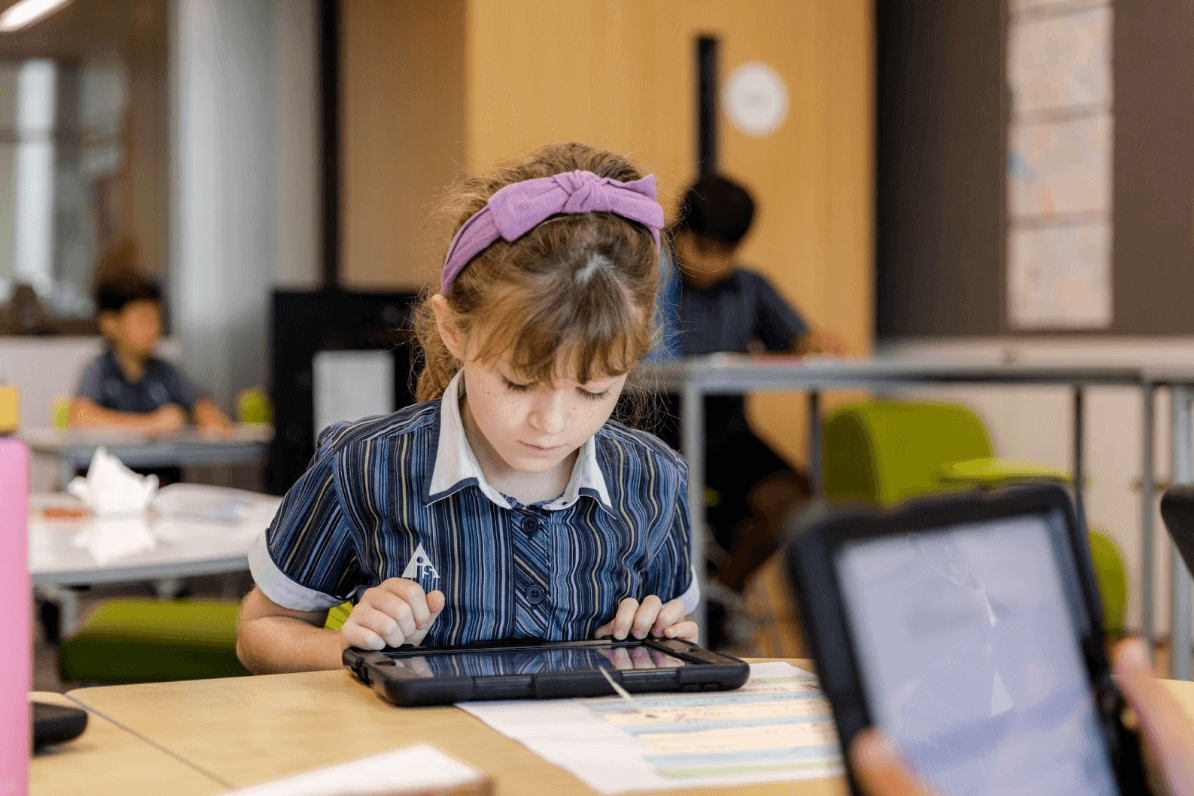
Understanding curriculum differences is important from the earliest years, as teaching philosophies and assessment approaches shape your child’s learning experience from the start—not just in senior school.
Early Years and Primary (Ages 3-11)
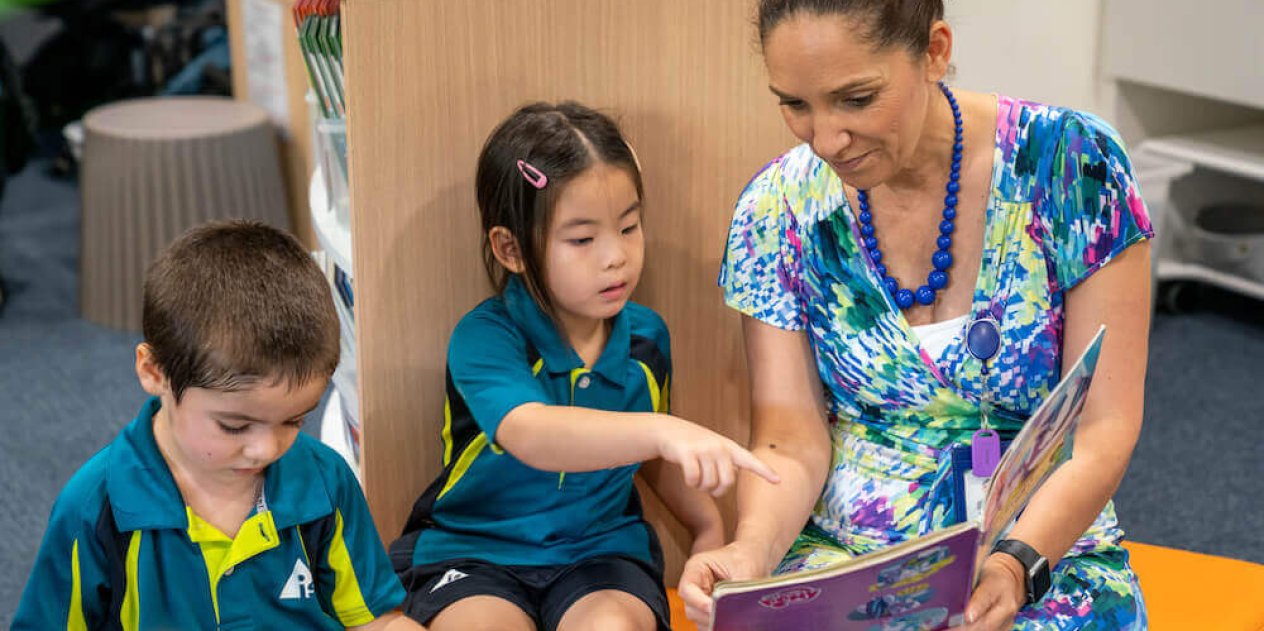
In the Australian curriculum, primary years focus on eight learning areas: English, Mathematics, Science, Humanities and Social Sciences, the Arts, Languages, Health and Physical Education, and Technologies. Learning is inquiry-based, with teachers guiding students to explore concepts through investigation and discovery. Assessment is ongoing and formative, providing continuous feedback rather than high-stakes testing.
British primary schools follow the National Curriculum of England, with a structured approach to literacy and numeracy. Key Stage assessments at ages 7 and 11 measure progress against national standards. Some international schools offer the IB Primary Years Programme (PYP) as an alternative, which takes a more inquiry-based, transdisciplinary approach.
American elementary schools emphasise foundational skills in reading, writing and mathematics, with assessment through regular classroom tests, projects and standardised assessments. The approach tends to be student-centred with flexibility for different learning styles.
Middle School (Ages 11-16)
Australian middle school continues the inquiry-based approach through Years 6-8, with students studying a broad range of subjects. Some schools then introduce the internationally recognised Cambridge IGCSE programme in Years 9-10, combining the rigour of British qualifications with the breadth of Australian education. This blended approach gives students the best of both worlds—academic challenge through IGCSEs while maintaining the inquiry-based learning philosophy.
British middle school follows the National Curriculum through Key Stage 3 (Years 7-9) before students begin their IGCSE courses in Years 10-11 (ages 14-16). Cambridge IGCSEs are internationally recognised qualifications covering a wide range of subjects, assessed primarily through external examinations. In 2024, over 950,000 IGCSE entries were recorded from students in 140 countries, making it the world’s most popular international qualification for 14-16 year olds. This two-year programme prepares students for A-Level specialisation.
American middle school maintains a broad general education with continuous assessment contributing to cumulative grades. Students begin exploring electives and may be placed in advanced or honours classes based on ability.
Senior School (Ages 16-18)
This is where the curricula diverge most significantly in terms of structure and assessment.

The Australian Curriculum: Senior Years
The Australian curriculum is developed by the Australian Curriculum, Assessment and Reporting Authority (ACARA). In the senior years, students maintain breadth, studying 5-6 subjects through to Year 12. Assessment balances ongoing coursework (typically 50%) with final examinations (50%), giving students multiple opportunities to demonstrate their understanding.
The final qualification is the Higher School Certificate (HSC), which is converted to an Australian Tertiary Admission Rank (ATAR)—a percentile ranking from 0 to 99.95 that indicates a student’s position relative to all Year 12 students in Australia. In 2025, over 60,000 students received an ATAR, with a median score of 70.75. The academic calendar runs January to December, aligning with Asian school years—particularly helpful for families relocating from countries like Japan, Korea, or China.
Some Australian curriculum schools also offer Vocational Education and Training (VET) as part of the HSC, giving students access to practical, industry-relevant qualifications in areas like construction and hospitality alongside their academic studies.
This curriculum suits students who thrive with a balanced approach, want flexibility to explore different subjects, and prefer a mix of coursework and examinations.
The British Curriculum: A-Levels
After completing IGCSEs, British curriculum students narrow their focus to 3-4 A-Level subjects in Years 12-13. This specialisation allows for deep study in chosen areas, with highly qualified subject specialists delivering content-focused lessons.
Assessment relies primarily on external examinations, with A-Levels graded from A* to E in individual subjects. While A-Levels offer depth in fewer subjects, this specialisation requires students to commit to their chosen field by age 16—a significant decision when many teenagers are still discovering their interests and strengths.
The academic calendar runs September to July.
This curriculum suits students who already know their strengths and preferred subjects, and who perform well in examination-based assessment.
The American Curriculum: High School and AP
American high school students take 6-8 subjects with considerable elective flexibility, allowing them to explore diverse interests while meeting core requirements. Assessment emphasises continuous evaluation through projects, essays, presentations, and tests throughout the year, contributing to a cumulative Grade Point Average (GPA) on a 0-4.0 scale.
Students who want additional challenge can take Advanced Placement (AP) courses—college-level classes with standardised examinations scored 1-5. With over 250,000 students taking AP exams annually and a pass rate of approximately 62%, strong AP results can earn university credits, potentially shortening degree programmes.
The final qualification is a High School Diploma accompanied by GPA and AP scores. The academic calendar runs August to June.
This curriculum suits students who prefer continuous assessment over high-stakes exams and value extracurricular involvement. However, the August-June calendar can create timing challenges for families relocating from or to Asian countries with January-December school years.
Curriculum Comparison at a Glance
| Factor | Australian | British | American |
|---|---|---|---|
| Primary Approach | Inquiry-based, 8 learning areas | National Curriculum / IB PYP | Student-centred, foundational skills |
| Middle School Pathway | Australian Curriculum + IGCSE option | Cambridge IGCSE | Continuous assessment |
| Senior Qualification | HSC / ATAR (or IB Diploma) | A-Levels | High School Diploma + AP |
| Senior Subjects | 5-6 subjects | 3-4 subjects | 6-8 subjects + AP electives |
| Assessment Style | 50% coursework, 50% exams | Primarily final examinations | Continuous assessment + GPA |
| Teaching Approach | Inquiry-based, facilitator-led | Traditional, subject specialists | Student-centred, holistic |
| Academic Calendar | January – December | September – July | August – June |
| Co-Curricular Emphasis | Strong (sports, arts, outdoor ed) | Moderate (sports, music) | Strong (clubs, sports, service) |
The International Baccalaureate Option
Many families also consider the International Baccalaureate (IB), which offers programmes across different age groups:
The IB Primary Years Programme (PYP) is designed for students aged 3-12, using a transdisciplinary, inquiry-based framework that develops the whole child. Students explore six themes of global significance while building skills across traditional subject areas.
The IB Middle Years Programme (MYP) serves students aged 11-16, connecting academic study with the real world through eight subject groups and interdisciplinary learning. However, not all schools offer the MYP—some combine the Australian Curriculum or Cambridge IGCSE with IB Diploma pathways in the senior years.
The IB Diploma Programme (IBDP) is the senior qualification for students aged 16-19. Students study six subjects across different disciplines plus complete an Extended Essay (a 4,000-word independent research paper), Theory of Knowledge (TOK), and Creativity, Activity, Service (CAS) requirements. According to the International Baccalaureate Organisation, over 200,000 students worldwide completed the IB Diploma in 2025, achieving a global average score of 30.58 out of 45 and an 81% pass rate. The IB Diploma is highly regarded by universities worldwide, with approximately 70% of students at some schools choosing this pathway.
Blended Curriculum Approaches
Some international schools in Singapore offer blended approaches that combine elements from different curricula. For example, a school might follow the Australian Curriculum in primary and early secondary years, introduce Cambridge IGCSE in Years 9-10 to build examination skills, then offer both the IB Diploma and Australian HSC as senior pathway options.
This blended model can offer the best of multiple systems: the inquiry-based learning philosophy of Australian education, the internationally recognised rigour of Cambridge qualifications, and the flexibility to choose between IB or HSC in the senior years based on your child’s strengths and university goals.
Which Curriculum is Best for University Admission?
A common misconception is that you should match your child’s curriculum to their target university destination. In reality, all major international qualifications—IB, ATAR, A-Levels, and AP—are accepted by leading universities worldwide. What matters more is finding a curriculum where your child can excel.
The truth about university recognition:
- The IB Diploma is accepted in over 140 countries, with many universities offering advanced standing or credit for high scores
- The ATAR is accepted by universities in the UK (including Oxford and Cambridge), the USA (including University of California system), Canada, Singapore (NUS, NTU), Hong Kong, and throughout Asia-Pacific
- A-Levels are accepted by over 600 US universities including all Ivy League institutions, plus strong recognition in UK and Commonwealth countries
- AP scores are accepted by 500+ universities in 75+ countries
What universities actually look for:
Rather than specific curricula, university admissions officers seek students who demonstrate academic excellence within their chosen programme, critical thinking and intellectual curiosity, breadth of interests and extracurricular engagement, and strong communication and research skills.
A student who thrives in an Australian or IB environment—achieving strong results and developing as a well-rounded individual—will have better university outcomes than one who struggles in a “matched” curriculum that doesn’t suit their learning style.
AIS graduates exemplify this principle, gaining admission to Cambridge, Stanford, University of Melbourne, NUS, and NTU through both our IB Diploma and Australian HSC pathways.
How ATAR Compares to A-Levels and IB
Parents often ask how to compare an ATAR with A-Level or IB results. The key difference is that ATAR provides a single overall ranking while A-Levels and IB show performance in different ways.
ATAR is a percentile ranking—a score of 85.00 means the student performed better than 85% of all Year 12 students in Australia. It’s derived from the student’s best subjects in their HSC, with different subjects weighted according to their scaling. Universities set minimum ATAR cut-offs for different courses.
A-Levels are graded A* to E in each individual subject. University offers are typically made based on achieving specific grades in specific subjects—for example, AAB in Chemistry, Biology, and Mathematics for a medical course.
The IB Diploma is scored out of 45 points total, combining grades from six subjects (each scored 1-7) plus up to 3 bonus points from the Extended Essay and TOK. A score of 24 is the minimum pass; scores above 40 are considered exceptional.
All qualifications are well understood by international university admissions offices, and most universities publish conversion tables or entry requirements for each.
Can Students Switch Between Curricula?
Students can move between curricula, though the ease of transition varies significantly by age.
In Early Years and Primary (ages 3-10), transitions are generally seamless as the focus is on foundational literacy, numeracy, and social skills that transfer across systems. Whether your child has been in a British, American, Australian, or IB PYP programme, they can adapt to a new curriculum with minimal disruption.
In Lower Secondary (Years 6-8), transitions remain manageable with some adjustment time for different teaching styles and content sequencing.
In Upper Secondary (Years 10-12), switching becomes more challenging as students begin formal qualifications—HSC, IGCSEs, A-Levels, IB, or AP courses—that typically span two years. Changing mid-course may interrupt qualifications and require catching up on subject-specific content. If your family may relocate during these years, consider starting with a curriculum you can continue, or choosing the International Baccalaureate, which is the same programme worldwide.
Choosing the Right Curriculum for Your Child
When selecting a curriculum, the most important factor is finding an environment where your child will thrive—not matching curriculum to university destination.
Consider your child’s learning style: Students who thrive with continuous feedback, varied assessment, and the freedom to explore multiple subjects often excel in Australian or IB programmes. The balanced approach—combining coursework with examinations—suits students who want multiple opportunities to demonstrate their abilities rather than having everything depend on final exams.
Think about readiness to specialise: British A-Levels require students to narrow to 3-4 subjects by age 16. If your child already has clear academic strengths and career goals, this may suit them. However, many students benefit from keeping options open through Years 11-12, which Australian and IB curricula allow with 5-6 subjects.
Consider family mobility: If your family may relocate again, curriculum continuity matters significantly. Schools offering the IB Diploma provide identical programmes worldwide. Australian curriculum schools follow a January-December calendar that aligns with Asian academic years—avoiding the disruption of mid-year transfers for families from Japan, Korea, China, or similar countries.
Think about holistic development: University admissions increasingly value well-rounded applicants. Curricula that emphasise co-curricular activities, community service, and personal development alongside academics—such as the IB’s CAS requirement or schools with strong outdoor education programmes—help students build compelling university applications.
Glossary of Curriculum Terms
For parents unfamiliar with Western education terminology, here are the key terms and abbreviations you’ll encounter when researching international schools:
| Term | Meaning |
|---|---|
| ATAR | Australian Tertiary Admission Rank—a percentile ranking (0-99.95) used for university admission in Australia |
| HSC | Higher School Certificate—the final qualification awarded to secondary school students in New South Wales, Australia |
| A-Levels | Advanced Level qualifications—British examinations typically taken at ages 17-18 in 3-4 subjects |
| IGCSE | International General Certificate of Secondary Education—internationally recognised qualifications typically taken at ages 14-16 |
| Cambridge IGCSE | IGCSE qualifications administered by Cambridge Assessment International Education, offered by many international schools |
| AP | Advanced Placement—college-level courses and examinations offered in American high schools, scored 1-5 |
| GPA | Grade Point Average—a numerical measure of academic achievement used in American schools (typically 0-4.0 scale) |
| IB PYP | International Baccalaureate Primary Years Programme—inquiry-based learning for students aged 3-12 |
| IB MYP | International Baccalaureate Middle Years Programme—for students aged 11-16 (not offered by all schools) |
| IB DP / IBDP | International Baccalaureate Diploma Programme—a two-year programme for students aged 16-19, scored out of 45 |
| CAS | Creativity, Activity, Service—a core component of the IB Diploma requiring extracurricular engagement |
| TOK | Theory of Knowledge—an IB course that explores how we know what we know |
| Extended Essay | A 4,000-word independent research paper required for the IB Diploma |
| VET | Vocational Education and Training—practical, industry-relevant qualifications offered alongside academic subjects |
| Key Stage | British curriculum assessment stages at ages 5-7 (KS1), 7-11 (KS2), 11-14 (KS3), and 14-16 (KS4/GCSE) |
| Inquiry-Based Learning | A teaching approach where students learn by asking questions, investigating, and discovering |
| Formative Assessment | Ongoing assessment during learning to provide feedback and guide instruction |
| Summative Assessment | Final assessment at the end of a learning period (e.g., end-of-year examinations) |
| CCAs | Co-Curricular Activities—activities outside the academic curriculum such as sports, arts, and clubs |
| EAL | English as an Additional Language—support programmes for students whose first language is not English |
| IES | Intensive English Stream—comprehensive English language programme for elementary students needing significant support |
English Language Support for Non-Native Speakers
For families relocating from countries where English is not the primary language, English proficiency support is a crucial consideration when choosing an international school. Many schools offer dedicated programmes to help students develop the academic English skills needed to succeed in the classroom.
At AIS Singapore, students have access to a comprehensive range of English language support options tailored to their age and proficiency level:
The English as an Additional Language (EAL) programme provides ongoing support for students who need help developing their English skills while studying in mainstream classes. Students are assessed during the enrolment process and placed in appropriate support levels—from beginner through to consolidating phases. In elementary school, this may include withdrawal classes with dedicated EAL teachers. In secondary school (Years 6-8), a co-teaching model provides EAL support within mainstream Humanities and Science classes, ensuring students don’t miss core content while building their language skills.
The Intensive English Stream (IES) is designed for elementary students (ages 6-11) who need more comprehensive support. With over 26 hours of weekly English instruction, students typically progress to mainstream classes within 12 months.
The Preparation Course for Secondary (PCS) is a one-year intensive academic English programme for students aged 11-14 (Years 6-9). This face-to-face course develops academic English through Maths, Science, Language and Humanities, preparing students for mainstream secondary studies. The course runs in two sessions aligned with the school calendar (January-June and July-December).
The Foundational Academic English (FAE) programme offers a flexible, partially self-guided option for students who need foundational preparation before entering the PCS programme. Students receive weekly teacher guidance while working through content at their own pace, with SLATE testing after 10 weeks to assess readiness for the next stage.
These pathways ensure that students from non-English speaking backgrounds—whether from China, Korea, Japan, Indonesia, or elsewhere—can successfully transition into an English-medium international school environment without being held back academically.
Why Families Choose AIS Singapore
At Australian International School Singapore, we offer a seamless educational journey from early years through to senior school. Our primary programme develops curious, confident learners through inquiry-based education. In Years 6-8, students continue with the Australian Curriculum before undertaking Cambridge IGCSE combined with selected Australian Curriculum subjects in Years 9-10—a dual approach that builds examination skills while maintaining breadth.
For the senior years, AIS is the only school in Singapore offering both the IB Diploma and Australian HSC, giving families a unique dual pathway choice. Approximately 70% of our students choose the IB Diploma, consistently achieving results above the global average. We’re also the only international school in Singapore offering Vocational Education and Training (VET) as part of the HSC pathway.
Our approach combines inquiry-based learning that develops critical thinking and creativity, balanced assessment with both coursework and examinations, over 300 co-curricular activities including sports, arts, and outdoor education, a January-December academic calendar that aligns with Asian school years, and a multicultural community with students from over 50 nationalities.
Our graduates achieve 100% university admission, with acceptances to leading institutions worldwide including Cambridge, Stanford, University of Melbourne, NUS, and NTU.
Learn More
Have questions about which curriculum is right for your child? Our Admissions team is happy to discuss your family’s needs and arrange a campus tour. Contact us today to start the conversation.