The Reggio Emilia Approach and Why It Benefits Your Child
Last updated January 2026
The Reggio Emilia approach is an internationally recognised educational philosophy that places the child at the centre of the learning process. Developed after World War II in the town of Reggio Emilia, Italy, this child-centred, play-based approach has gained widespread popularity for its ability to foster creativity, curiosity, and independent thinking in young children.
According to the Reggio Children Foundation, the approach has influenced early childhood education in over 145 countries, with thousands of schools adopting its principles to create more engaging, child-led learning environments.

What is the Reggio Emilia Approach?
The Reggio Emilia philosophy is based on the belief that children are naturally curious and capable of directing their own learning. Rather than following a traditional, rigid curriculum, this approach focuses on child-led exploration and collaboration. Children are viewed as co-creators of knowledge, with teachers acting as facilitators who guide and support the learning process.
The core principles of the Reggio Emilia approach include:
The Child as a Capable Learner
Children are seen as competent, capable, and full of potential. The Reggio Emilia approach empowers them to take control of their own learning, fostering independence and self-confidence. Research published in the National Association for the Education of Young Children (NAEYC) journal confirms that child-centred approaches lead to stronger self-regulation and executive function skills.
Emergent Curriculum
In Reggio Emilia classrooms, learning is driven by the children’s interests and ideas. Teachers observe students and create learning opportunities based on their curiosity, allowing children to explore topics in greater depth and at their own pace. This responsive approach ensures that learning remains meaningful and engaging.
The Learning Environment
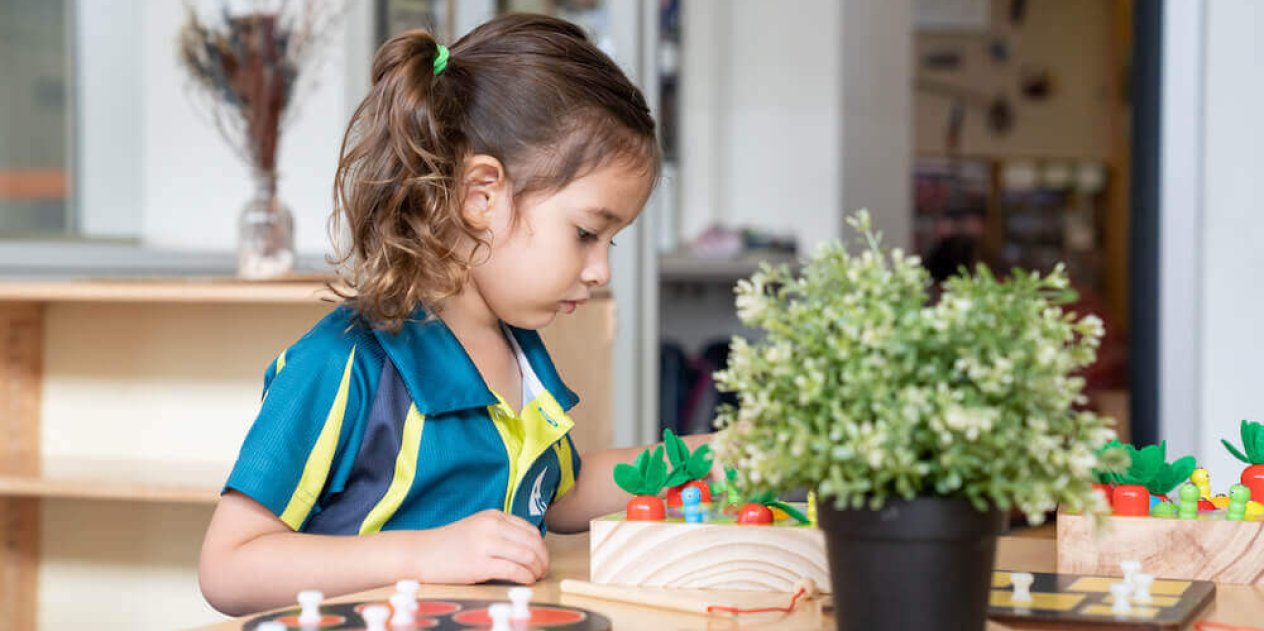
Often referred to as “the third teacher,” the classroom environment is thoughtfully designed to inspire creativity and exploration. Reggio Emilia classrooms are open, inviting, and filled with natural materials that encourage interaction and hands-on learning. Studies show that well-designed learning environments can improve children’s concentration, creativity, and overall engagement by up to 25%.
Collaboration and Communication
Children are encouraged to collaborate with their peers, sharing ideas and working together on projects. This emphasis on communication helps children develop important social and emotional skills while fostering a strong sense of community.
Documentation of Learning
Teachers carefully document the learning process through photographs, observations, and student projects. This not only makes learning visible to the child and their family but also encourages reflection and deeper understanding. Documentation serves as a powerful tool for tracking development and celebrating each child’s unique learning journey.

Why the Reggio Emilia Approach Benefits Your Child
The Reggio Emilia approach fosters critical thinking and problem-solving by encouraging children to ask questions, explore ideas, and think creatively. It promotes independence and confidence by allowing children to take an active role in their learning, which boosts self-assurance and prepares them for future challenges.
Through collaboration and communication, children also develop essential social and emotional skills, helping them navigate interactions and build emotional intelligence. By offering the freedom to explore topics of interest, the approach nurtures a love for learning, while its personalised focus ensures each child’s unique needs are met, allowing them to thrive.
Key benefits supported by early childhood education research:
- Enhanced creativity and problem-solving: Children learn to approach challenges from multiple perspectives
- Stronger social-emotional development: Collaborative projects build empathy, communication, and teamwork skills
- Greater independence and self-confidence: Child-led learning empowers children to trust their own abilities
- Deeper engagement with learning: Interest-driven curriculum keeps children motivated and curious
- Better preparation for future education: Skills developed align with 21st-century learning competencies
The Lasting Impact of the Reggio Emilia Approach
The Reggio Emilia philosophy provides children with a solid foundation for both academic success and personal growth. Its focus on creativity, critical thinking, and collaboration prepares children for the challenges of the modern world, while its child-centred approach fosters a love of learning that lasts a lifetime.
By prioritising curiosity, independence, and social development, the Reggio Emilia approach ensures that children are not only gaining knowledge but also building the skills they need to thrive in school and beyond.
Reggio Emilia at the Australian International School
The Australian International School (AIS) proudly integrates the Reggio Emilia philosophy into its Early Years programme. With a focus on nurturing young minds through creativity, exploration, and collaboration, AIS creates an environment where children can flourish and grow into confident learners.
AIS Early Learning Village highlights:
- Purpose-built 50,000 sqm Early Learning Village inspired by Reggio Emilia principles
- 10,000 sqm of outdoor learning space designed to encourage exploration
- Voted Best Early Learning Programme in Singapore (HoneyKids Education Awards 2021)
- Qualified early childhood educators trained in Reggio Emilia methodology
- Small class sizes ensuring personalised attention for each child
If you’re interested in learning more about how the Reggio Emilia approach can benefit your child, we invite you to contact the Australian International School to schedule a tour or speak with our Early Years educators. We’d love to share more about our commitment to fostering curiosity and a love of learning in every child.